Artur Martirosyan

Series

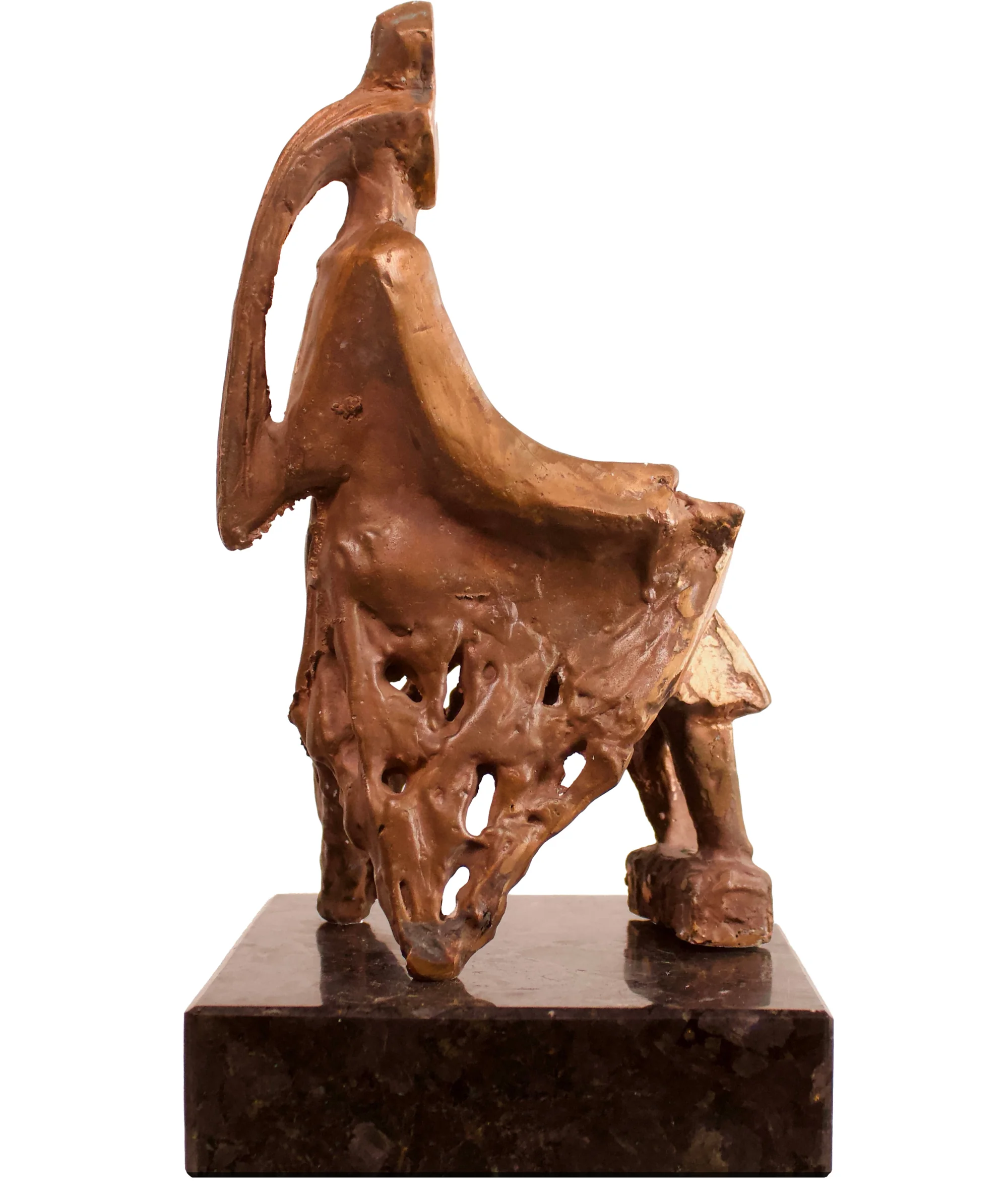
DAMMA, 2020 — full view

Sculpture · 2020–2025

Cappella

In this series, Artur Martirosyan turns to antiquity not as a historical period, but as a plastic category. The series is based on anthropomorphic sculpture. He turns to figurative forms, yet deprives them of portrait likeness and narrative — they become generalized plastic signs, referring to archaic cults and ancient canons. At the same time, a Christian narrative is present in the works, creating a semantic tension between pagan form and Christian content. Thus, the series becomes a study of the very idea of the artifact, where time and plastic language enter into contradiction. His sculptures exist as hybrids, where archaic form meets contemporary perception, creating a new object that belongs neither to the past nor to the present, but exists in its own time — one that signifies only itself, like a myth created anew.

View the series ↗
One Apricot, 2026 — full view

Sculpture · 2020–2026

Apricot

In this series, Artur Martirosyan turns to the apricot as a starting point for creating a new mythology. The fruit, deprived of its natural context, becomes material for constructing a myth — an object that imitates the sacred but belongs to none of the existing systems. This is an attempt to create a new myth through plastic form. The apricots are always placed in a state of weightlessness — floating in the air, without touching any surface. This compositional decision emphasizes their detachment from reality: the fruit no longer belongs to either the tree or the earth; it exists as an autonomous object, like an idol deprived of any utilitarian function. At the same time, he deliberately introduces dynamics into each work: the apricots are turned at different angles, some are shown in cross-section, with the pit exposed, others — at the moment when their surface begins to crack. This creates an effect of movement, of a stopped instant, when the object is fixed not in statics, but in a transitional state — between the material and the metaphysical. In these works, the apricot ceases to be a fruit. It is an artifact of a new mythology, an object that simulates the sacred but remains empty inside. The form carries the memory of the fruit, yet exists in another dimension — as a sign signifying only itself, like a myth created anew.

View the series ↗
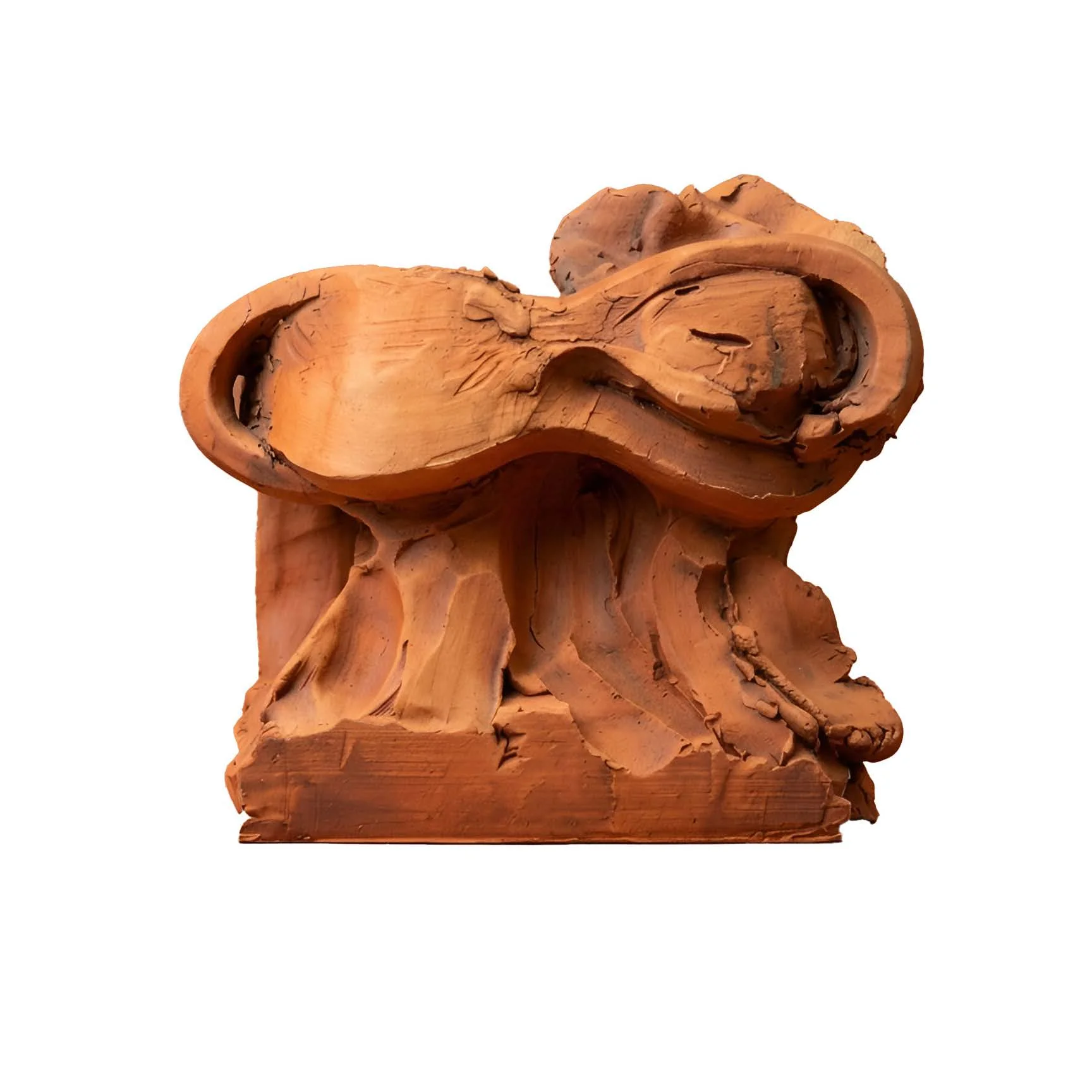
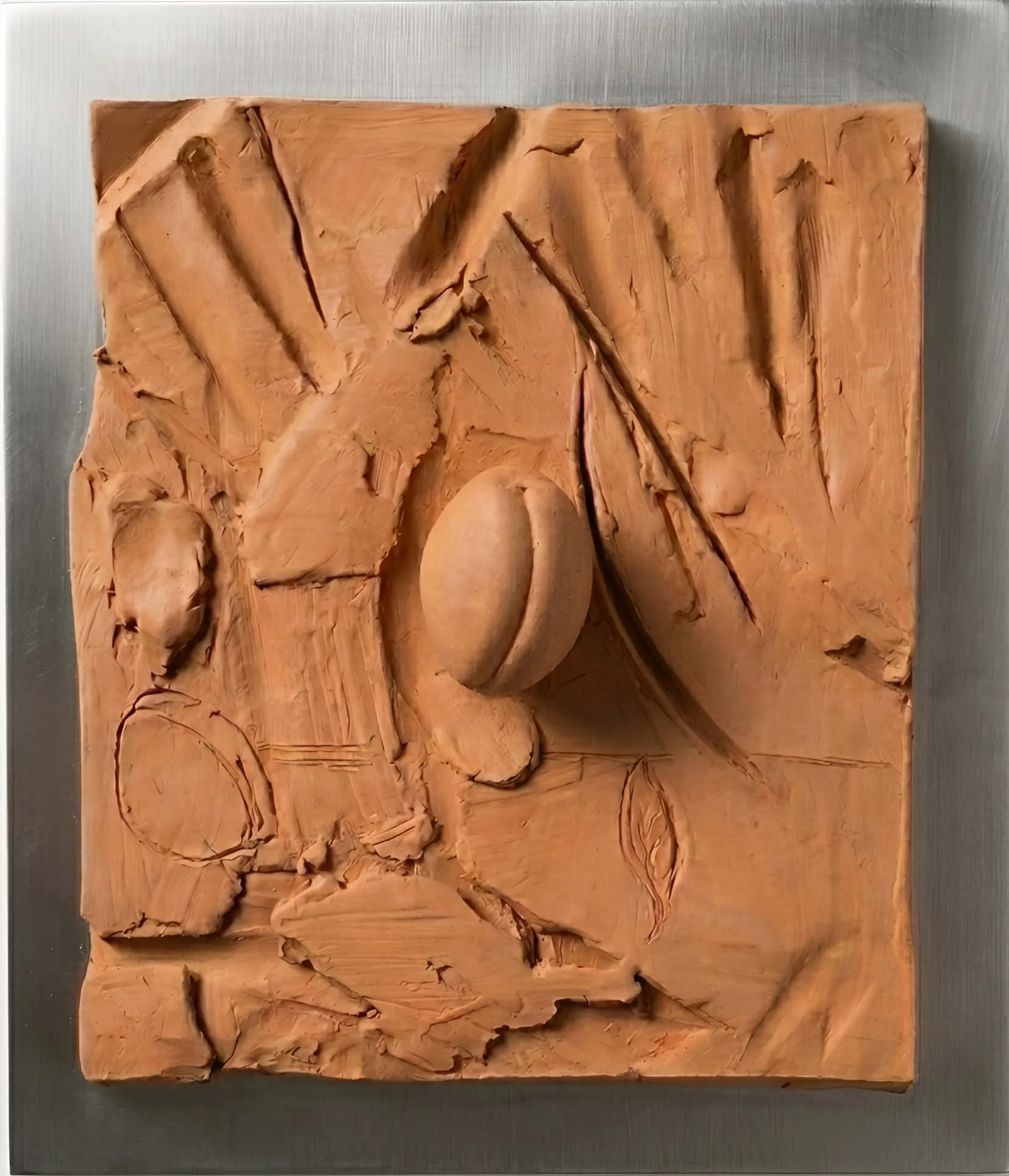
Occhi MM6, 2026 — full view

Sculpture · 2022–2026

Occhi

This series emerged from observing shop windows—their sterile aesthetics and the obsessive presentation of commodities. Accessories displayed as objects of desire exist as pure signs, stripped of their function, which struck me as compelling material for reexamination. I decided to extract these items from the context of consumption and transpose them into sculptural space. For me, the series became a reflection on the nature of consumer culture—on how objects lose their essence, transforming into simulacra designed for sale rather than use. At the core of the series are eyeglass frames, which I rework into plastic objects. I am interested not in the recognizability of the object, but in its transformation into mass, where traces of sculpting and brushstrokes remain visible. This is a way to move away from the pettiness of vitrine display toward a dense, tangible form. Each pair of glasses becomes not a portrait, but a hint of one—a silhouette of a face, an outline of a character conveyed through the geometry of the frame and the texture of the surface. In this series, I employ a marketing tactic: the exact same item is created in various styles and genres, forming an entire product line. This turns the series into an exploration of formal variability within a given motif, where each work is a distinct model, yet all are gathered into a single system. Thus, a certain collection emerges—not as a commercial commodity, but as a plastic experiment, where a recurring object acquires a multiplicity of interpretations. It is simultaneously an irony directed at consumer logic, which offers an endless choice of the same thing, and a way to restore individuality to the object through manual labor and plastic statement.
View the series ↗
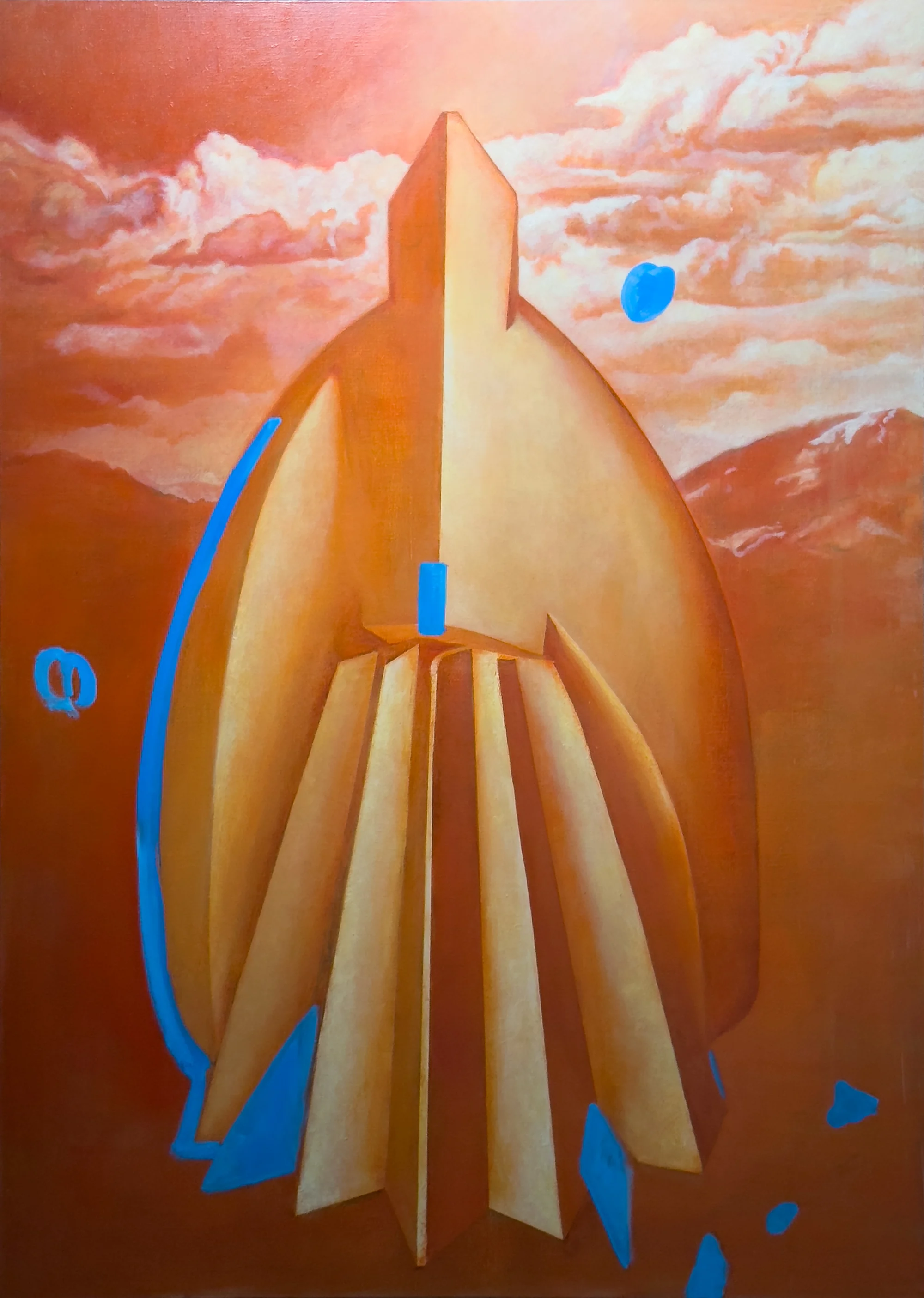
Matryoshka and Apricots, 2025 — full view

Painting · 2025–2026

Cappella

This series marked my transition from sculpture to painting—not merely as a change of medium, but as an expansion of formal plastic exploration. In «Cappella,» I have placed my sculptures within the space of the canvas for the first time, yet not with the intention of reproducing them. Rather, it is an attempt to rediscover their form through a different lens, where three-dimensional volume is translated onto a flat surface via color and texture. The visual language of the series was shaped by the influence of Marino Marini’s paintings—specifically his impasto style, where paint is applied thickly and roughly, in an almost sculptural manner. However, rather than copying his techniques, I use them as a point of departure. My paintings do not illustrate the «Cappella» sculptures; instead, they create a parallel world where form continues its existence in a different substance. Thus, the series has become a laboratory for me: here, I investigate the boundaries between volume and flatness, between sculptural tangibility and pictorial optics. And while sculpture captures the final, definitive form, painting allows me to record the very process of its pursuit.

View the series ↗
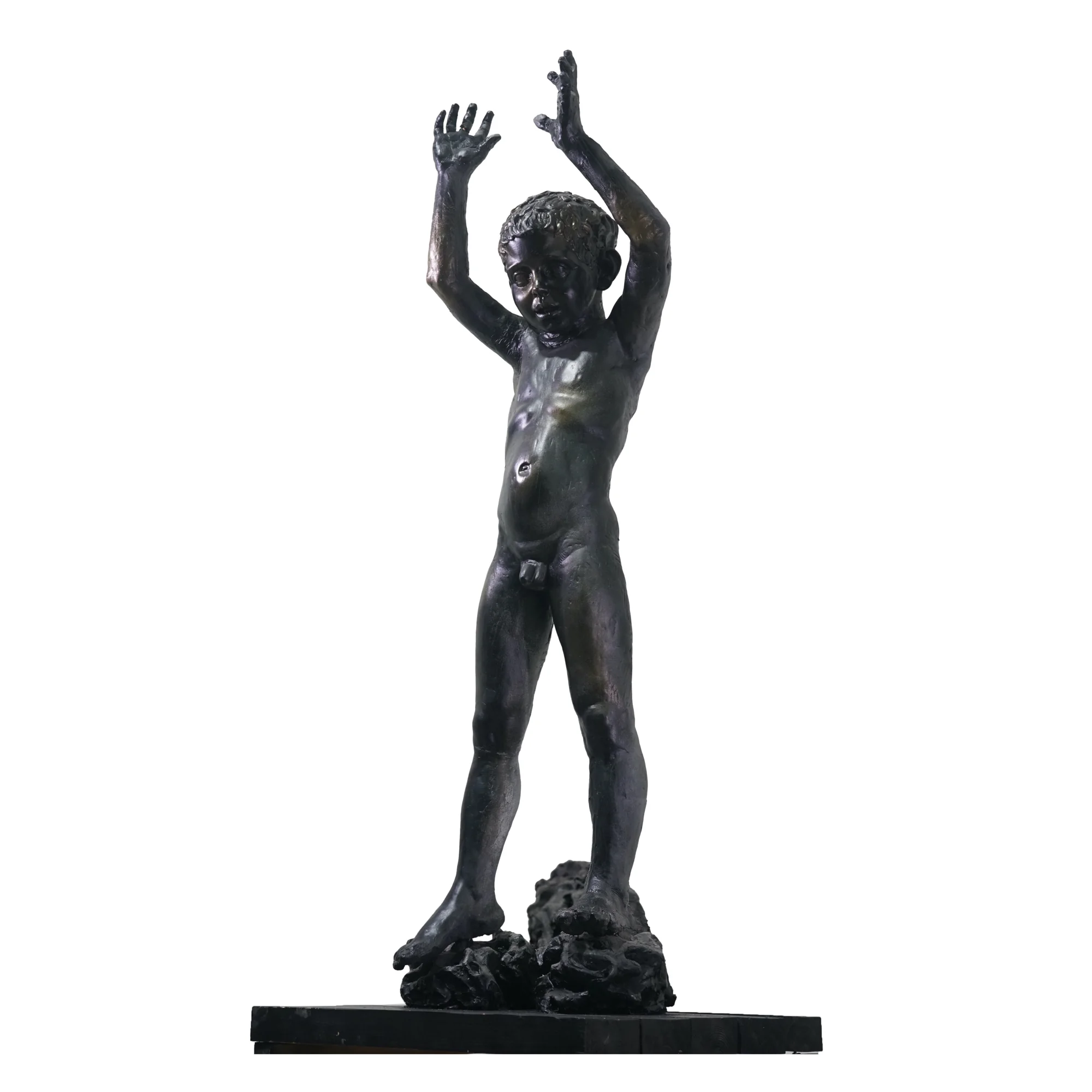
Boy, 2020 — full view

Sculpture · 2020

MACHINA SACRA

His first independent series, created in 2020, became the starting point of Artur Martirosyan’s mature plastic language. In it, he first declared himself as an artist for whom sculpture is not only a form but also a philosophical statement. The series brings together works executed in an anxious, dark aesthetic that he defines as «gothic neo-contemporary art.» Here, medieval exaltation clashes with the cold rationality of modernity, and sacred images are reinterpreted through the prism of political and social violence. For him, every series begins with a concept — with a question that he wants to explore plastically. He never chooses a style in advance, just as he does not choose the material. The stylistics are born within the work on the concept, as a natural response to the task at hand. In the case of «MACHINA SACRA,» the conceptual core was the idea of the religious institution as a machine that manufactures submission. It was this very inquiry that dictated the gothic verticality, dramatic chiaroscuro, tense, almost exhausted proportions, rough textures, and a sense of spiritual tension bordering on decay. Everything else — form, material, composition — was born from this conceptual decision, and not the other way around.

View the series ↗